
My Claude Rules Don't Scream Anymore
One day, I cleaned up my instructions for Claude Code. Fewer capital letters, hard boundaries as permission rules, and just one model instead of four.
Three alarm words in four lines
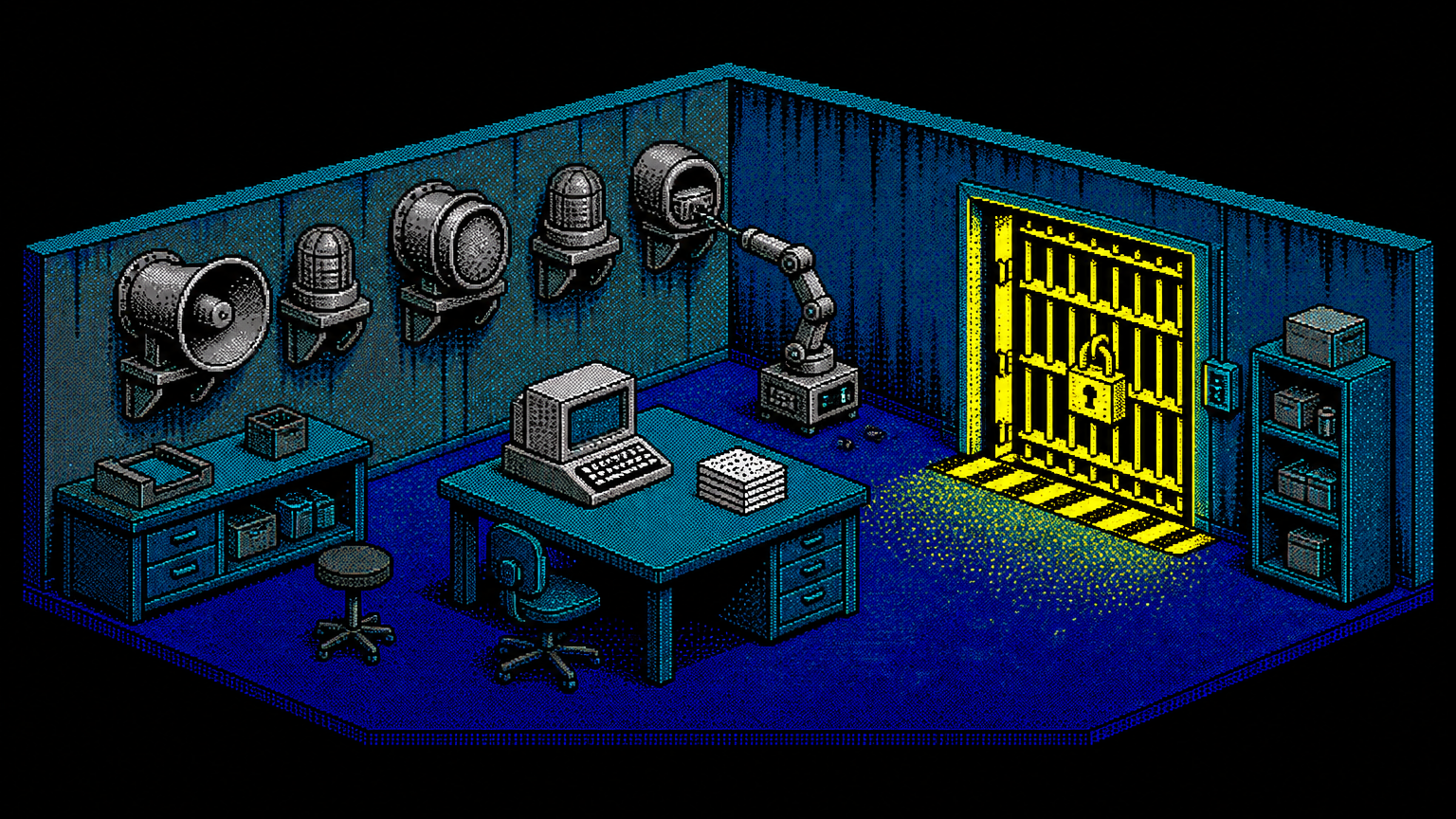
Until yesterday, at the very top of my global CLAUDE.md, the file with the basic rules for every Claude Code session: “CRITICAL SAFETY RULE: Delete Protection”. Below that: “MANDATORY CONFIRMATION BEFORE ANY DELETE OPERATION” and “NEVER delete files … without explicit user confirmation”. Each of those lines had a reason. At some point, something disappeared that was supposed to stay, and I made the rule louder.
On November 18, I compared my instructions with Anthropic’s current guide to prompting Claude models. It says, in essence: Newer models follow the system prompt more closely than their predecessors. Phrases like “CRITICAL: You MUST …”, which used to compensate for weak compliance, now make a rule trigger too often. The recommendation is to simply say what applies.
I did that for a day. Afterward, my sync repo had seven commits: 75 files changed, a little over 4,200 lines added and 1,100 removed.
A loud rule needed a counterrule
I already had proof the guide was right in my own file. My Claude sessions run in nono, a sandbox that can’t be expanded from the inside. The rule in question said: At “operation not permitted,” tell the user immediately (“IMMEDIATELY tell the user”) and never try a workaround (“NEVER attempt”). That was the right idea.
Then other agent tools came along, with their own sandbox. Codex in read-only mode simply can’t write, and even git fails there because of a cache file in /tmp. The loud nono rule still kicked in, and the agent stopped to ask for a restart nobody needed. So I wrote a second section titled “Agent CLI sandboxes are not nono.” Twelve lines, just so the first rule wouldn’t apply everywhere.
A rule that needs a counterrule is too loud.
Today it says “Tell the user right away” and “Do not attempt.” The content is the same; only the alarm bell is gone.
What isn’t negotiable now lives in settings.json
Using gentler wording doesn’t mean loosening the rules. Some things should never happen, no matter how the model weighs an instruction. Prose is the wrong place for those.
One example: Apple Container’s cleanup commands, namely container prune, container volume prune and container image prune, have no filters. They remove everything, including containers from other projects. It used to say in all caps in the CLAUDE.md, that they’re off-limits. Now a Deny rule in the settings.json blocks all three, and the text mentions this in passing. Claude Code checks this rule before every call, regardless of what the model has read or overlooked. For ssh and the write commands in my server wrapper, the same applies in a milder form: They’re on the Ask list and come to me for confirmation.
If you maintain a CLAUDE.md maintain, this is worth a look: Every rule in all caps is a candidate for a permission or a hook. What the tool can enforce, the model doesn’t need to memorize.
I only work with Claude now
A second decision came that same day, and it’s what really made the overhaul so big. Alongside Claude, I’d also integrated Codex, Gemini via Antigravity, and OpenCode for second opinions and reviews. That included custom agents, an Antigravity skill, profiles for an agent orchestrator, plus a 1,379-line onboarding handbook, and in many repos a AGENTS.md alongside the CLAUDE.md. About 40 such twin files that had to be kept in sync with every change. My final command /afterwork even had a step of its own for that.
That's all gone. Maintaining both took time, and the global AGENTS.md was loaded in every Claude session in addition to the CLAUDE.md loaded. So with every request, I was paying for context for instructions to models that weren't even running.
The decision applies to my work environment, not my products. My Workbench, a terminal multiplexer for AI agents, continues to support Codex, OpenCode, and Pi as backends, because those who use it choose their own model. I just stopped maintaining every instruction twice.
With the other agents gone, there was no longer any reason for the sandbox override. Some of the noise was a consequence of tool diversity.
A check to keep it from coming back
Deleted things have a way of coming back for me. My skills—that is, the instructions Claude loads for specific tasks—are synced between my computer and Git repo. A sync from an older version reliably brings back a removed agent. That's why my check command /check-skills got a new check 19.
It looks for names that were deliberately retired: the old agents, the Codex plugin, the AGENTS.md as a twin. Exempt are tools that are still meant to talk to other agents, such as my terminal Workbench. It finds agents without effort:-setting, because an agent with its own model has used that model's default level since Claude Code 2.1.317, rather than the session's. And it counts emphasis words: NEVER, ALWAYS, MUST, CRITICAL, IMPORTANT, MANDATORY.
This final section doesn't judge; it only counts. This morning, it came to 384 hits in my 83 own skills. The global files are cleaned up, but the skills are far from it. Some of this appears in quoted error messages or examples of bad prompts and can stay. No count can tell me which MUST actually pushes a model too far; I have to read skill by skill.
Created by Martin Schmid, with support from Claude Opus 5.5 and approved after my own content review. Our Notes and disclaimer.